


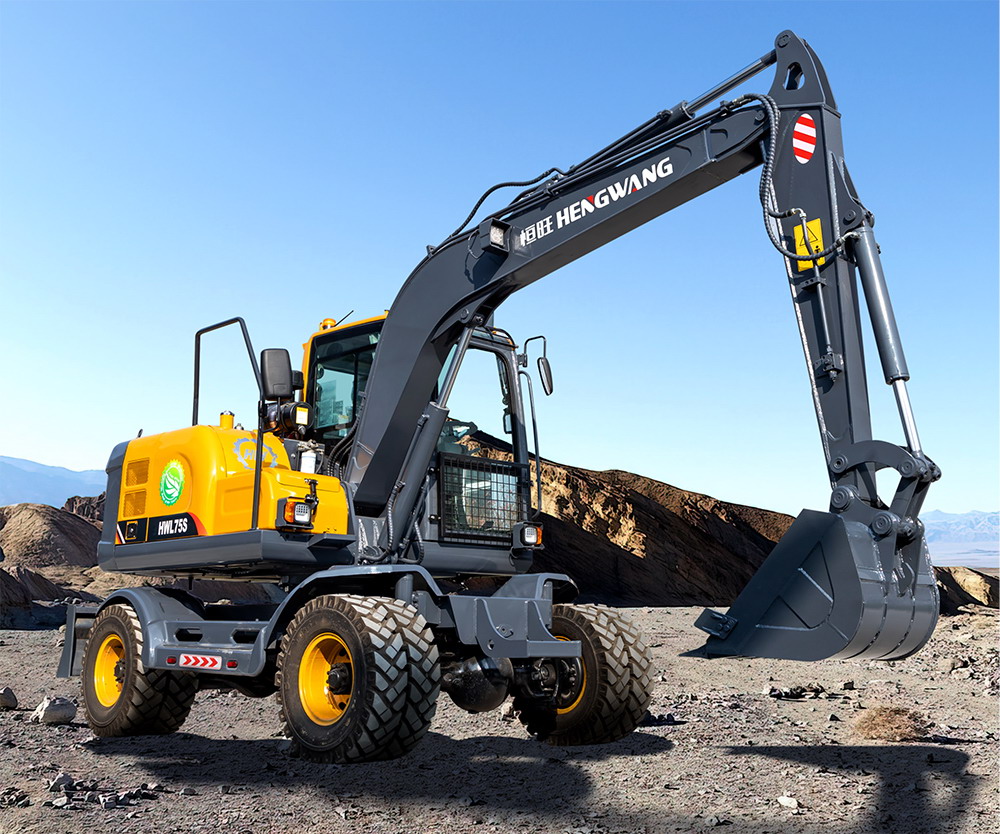
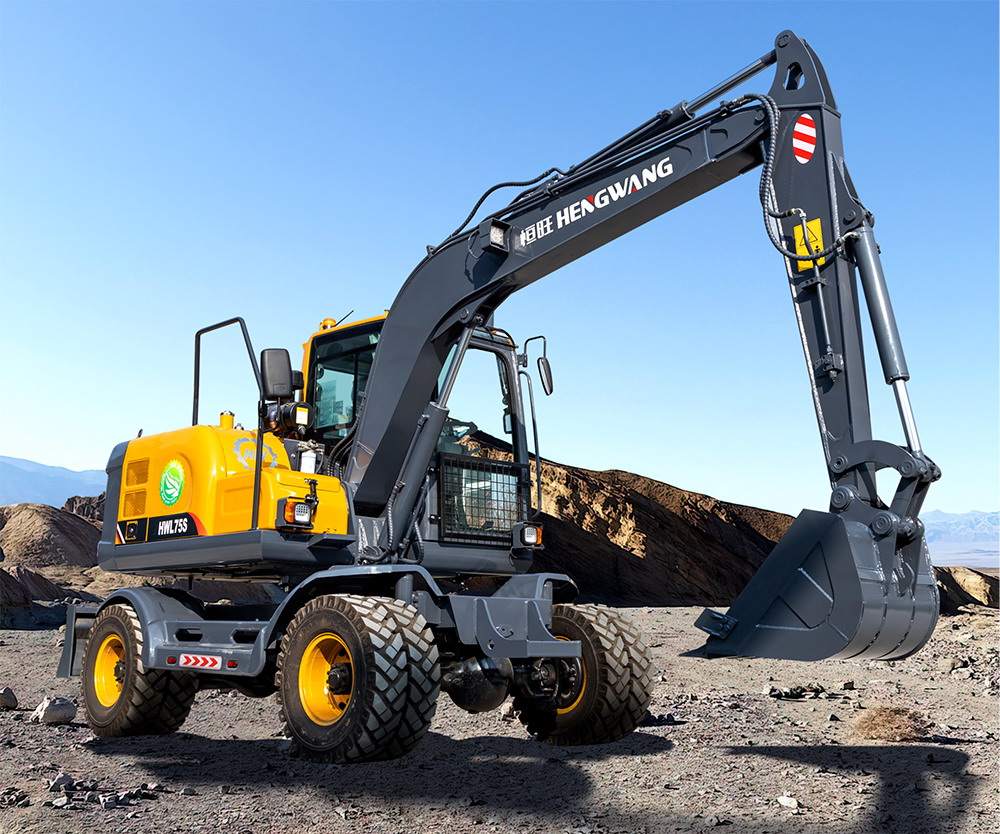
Amidst the roar of machinery and the clamor of the construction site, your closest steel partner—the Hengwang excavator—is "telling" you everything in its own way. It doesn’t speak, but every abnormal sound, every faint oil stain, and every sluggish operation is a "health signal" it sends to you. Today, Hengwang Group introduces you to a diagnostic technique that requires no precision instruments—using your ears, eyes, and hands to become the first guardian of your equipment.

Listen to the Sound: Capturing Warning Signals in the Equipment's "Language" The sound of an excavator in operation is its most direct health indicator. Under normal conditions, the engine and hydraulic system of a Hengwang excavator run smoothly and rhythmically. Pay attention to the following abnormal "sounds":
Engine Abnormalities:
Sharp "whistling" or "hissing" sounds: May indicate turbocharger seal leakage or air intake system leaks.
Dull "knocking" sounds (intensifying with increased RPM): Could be related to improper fuel injection timing, worn connecting rod bearings, or main bearing wear, requiring prompt inspection.
Irregular "backfire" or "misfire" sounds: Often caused by incorrect ignition timing (or injection timing for diesel engines) or valve issues.
Hydraulic System Abnormalities:
The pump emits a continuous sharp "humming" or "whining" sound: A typical sign of hydraulic pump cavitation, often caused by insufficient hydraulic oil, clogged filters, or suction line leaks, which can severely damage the pump.
"Clicking" or "impact" sounds during actuator (cylinder, motor) operation: May indicate internal cavitation, worn valve spools, or air in the system.
Continuous high-frequency "hissing" sounds in the multi-valve area: Usually caused by internal high-pressure oil leaking through tiny gaps, possibly indicating worn valve spools or seals.
Hengwang Group Reminds You: Any sudden or progressively worsening abnormal noise should be treated as a clear instruction to stop and inspect the equipment.
Observe Closely: Key Details in Visual Inspections Many faults leave visual clues in their early stages. Develop the habit of walking around the machine and focusing on specific areas.
Look at the "Blood"—Hydraulic Oil:
Color: Fresh oil is typically a clear amber. If it turns dark brown or black, it indicates severe oxidation and aging, requiring immediate replacement. If it appears milky white, it signals water contamination, and the cause (e.g., cooler leakage, condensation) must be identified and thoroughly addressed.
Condition: Check the dipstick or sample bottle. The presence of excessive metal shavings or impurities indicates abnormal internal wear in the system.
Look at the "Breath"—Exhaust Color:
Normal: Under normal working loads, diesel engine exhaust should be colorless or faintly gray.
Abnormal:
Continuous black smoke: Incomplete combustion, possibly due to insufficient air intake, faulty injectors, poor fuel quality, delayed injection timing, or engine overload.
Blue smoke: Typically indicates oil entering the combustion chamber. Be alert to worn piston rings, cylinder liners, aging valve seals (especially in engines that have experienced overheating), or turbocharger seal failure.
White smoke (excluding cold starts): May indicate a damaged cylinder head gasket, cracked cylinder head, or punctured cylinder liner, allowing coolant to enter the combustion chamber.
Look at the "Face"—Dashboard and Monitor Screen:
The multifunctional monitor in the Hengwang excavator’s cab is the core of its health. Any persistent red warning light on the dashboard must be addressed immediately.
Pay Special Attention To:
Hydraulic oil temperature/coolant temperature high alarms: Check if the radiator is clogged, the fan is damaged, the fan belt is loose or worn, the coolant level meets standards, and if the hydraulic return filter is clogged.
Low oil pressure alarm: An extremely dangerous signal that may lead to engine bearing seizure or cylinder scoring.
Air filter clogging indicator: Ignoring it early will directly reduce engine power. Continued neglect may cause severe air filter blockage, creating significant negative pressure in the intake system. This could damage the filter structure or force unfiltered dirty air into the engine through poorly sealed edges.
Personal Perception: Abnormal Tactile Feedback During Operation As an experienced operator, your hand feel, foot feel, and perception of the equipment’s responsiveness are crucial.

Feel the "Force"—Operational Performance:
All actions are generally sluggish or weak: First, check if the pilot pressure is normal. This may also indicate insufficient main pump output flow (due to internal wear or regulator failure) or system pressure leaks.
A single action is weak or slow: The issue may be limited to the corresponding valve spool, cylinder seal, or pipeline for that action.
Actions are jerky or not smooth: Could be due to blocked oil lines, stuck valve spools, or unstable pilot control signals.
Feel the "Temperature"—Abnormally Hot Areas:
Safely and quickly touch key areas with the back of your hand (not the palm).
Hydraulic oil tank, pump body, multi-valve: These areas have normal operating temperatures, but if they are too hot to touch, it indicates poor heat dissipation, low internal efficiency, or severe leakage and friction.
Swing bearing, travel reduction gearbox housing: Abnormal high temperatures suggest possible lack of lubrication or damaged bearings/gears.
Building Trust in "Human-Machine Symbiosis" with Hengwang
We understand that self-inspection can uncover most issues, but solving complex faults requires professional expertise. When your "inspection, listening, questioning, and pulse-taking" encounter difficulties, Hengwang Group’s extensive service network is your most reliable support. With a single call, our technical experts will provide precise remote assistance or prompt on-site service, along with genuine factory parts, ensuring your equipment quickly returns to peak performance.
Take action now. Starting today, give your loyal Hengwang partner a thorough "check-up." Because the best repair is always prevention.

Please fill out the form below according to your needs, and a Hengwang product specialist will contact you within one day.