


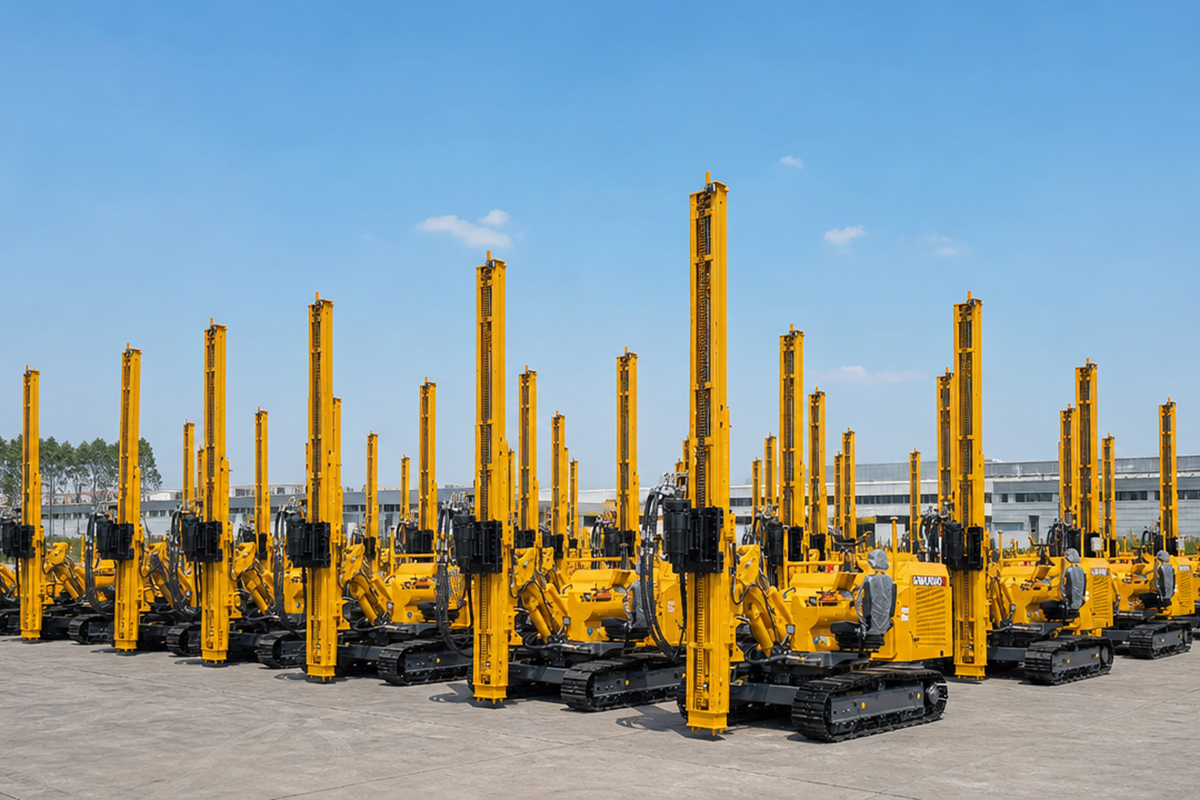
Most operators share the same view: although solar pile drivers are built from heavy‑duty steel and appear rugged, they have vulnerable weak points. Driven by tight construction schedules on‑site, operators often hit full throttle, force through obstacles and drive piles forcibly when encountering hard soil, gravel‑strewn ground or steep, complex terrain. While this may gain a few minutes of progress in the short term, repeated rough handling gradually wears down equipment service life and creates hidden failure risks. The end result is frequent downtime, costly repairs and rework on pile foundations — hardly worth the cost.
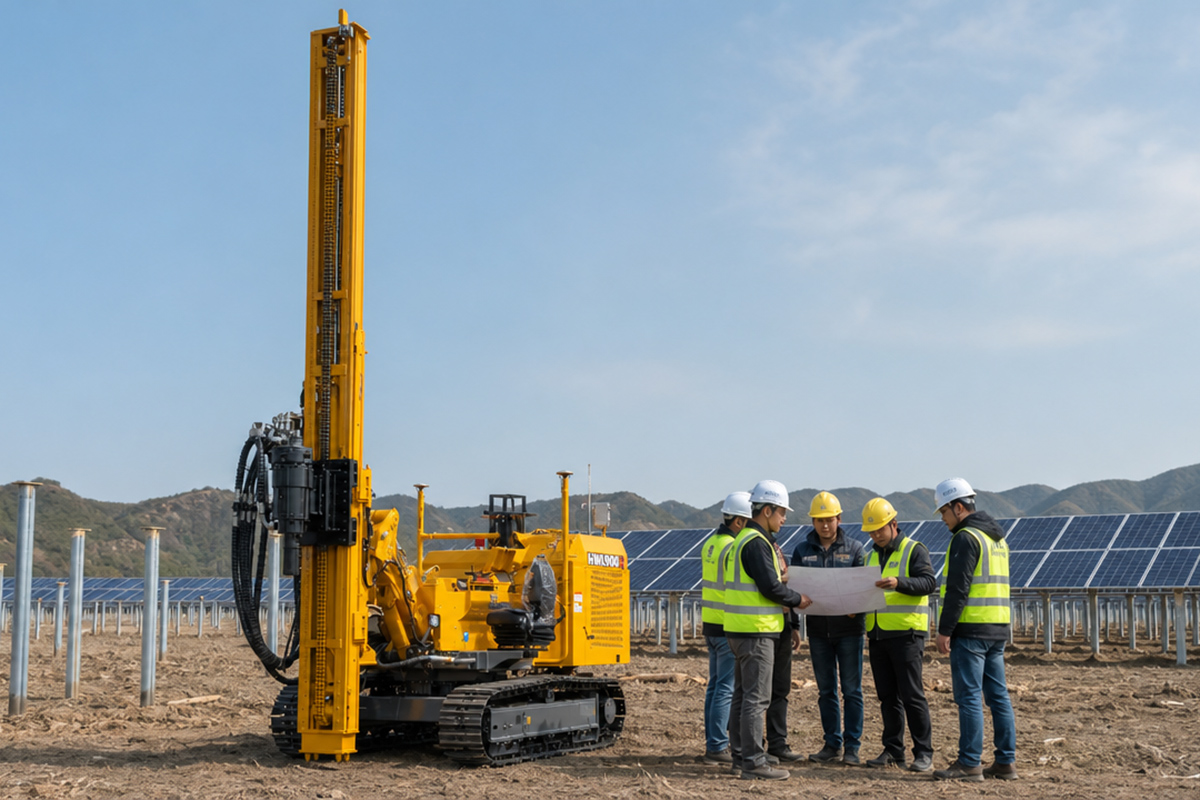
Premature aging, frequent breakdowns and high failure rates of most solar pile drivers stem not from poor equipment quality, but from cumulative long‑term non‑standard operation. Even heavy‑duty machinery suffers from harsh usage. Proper operation and equipment maintenance are the real keys to higher site efficiency and lower costs. Drawing on hands‑on front‑line construction experience, Hengwang Group identifies four key fragile components of pile drivers, explains damages caused by common rough‑handling practices, and provides step‑by‑step standard operating procedures. This helps operators avoid construction pitfalls, cut equipment wear and extend machine service life.
01 Drill Rod & Drill Bit: Vulnerable to Forced Drilling in Hard Layers and Forced Eccentric Abrasion
Drill rods and drill bits are core consumable parts for pile foundation work. A common site error is forcing full‑speed penetration without testing soil conditions or adjusting parameters when hitting gravel, compacted soil and boulders. Operators also keep working under offset pile positions, forcing abrasive drilling.
Such practices easily lead to chipped‑tooth wear on drill bits, bent drill rods and thread fracture. They further result in skewed piles, poor positioning accuracy, rework and work delays. Standard practice: probe soil at low speed, adjust rotational speed and feed pressure according to ground conditions. Apply light feed pressure when hard resistance occurs. Stop immediately for fine adjustment if pile offset appears; never force operation.
02 Hydraulic System: Vulnerable to Instant Full‑Load Operation and Violent Start‑Stop
The hydraulic system serves as the power heart of the pile driver and demands smooth operation. Many operators adopt rough habits: running at full load right after startup, yanking control levers to full stroke, high‑pressure pump stalling upon resistance, and direct shutdown upon finishing work. These create major hidden failure risks.
Prolonged overloading triggers excessive hydraulic oil temperature, leaking seals, hydraulic pump wear and pipeline cracking — primary causes of insufficient power and jerky lifting/lowering. Standard practice: perform idling preheating, operate control levers smoothly, release pressure promptly when resistance is met, reset functions under no‑load condition and idle before shutdown to protect the power system.
03 Slewing Mechanism: Vulnerable to Load‑Bearing Sharp Rotation and Forced Swinging In‑Situ
Solar PV sites feature dense piling points and frequent repositioning. To save time, many operators perform high‑speed slewing and sharp in‑situ swings while drill rods remain un‑lifted and machine functions are not reset. Massive inertial force directly impacts the slewing bearing and reducer.
Over time, this causes gear wear, unstable machine sway, loss of piling accuracy and sharply higher repair expenses. Standard practice: fully lift drill rods in advance, rotate steadily and slowly throughout movement, start and stop smoothly for positioning. Sudden slewing or stopping must be avoided to guarantee machine stability and construction precision.
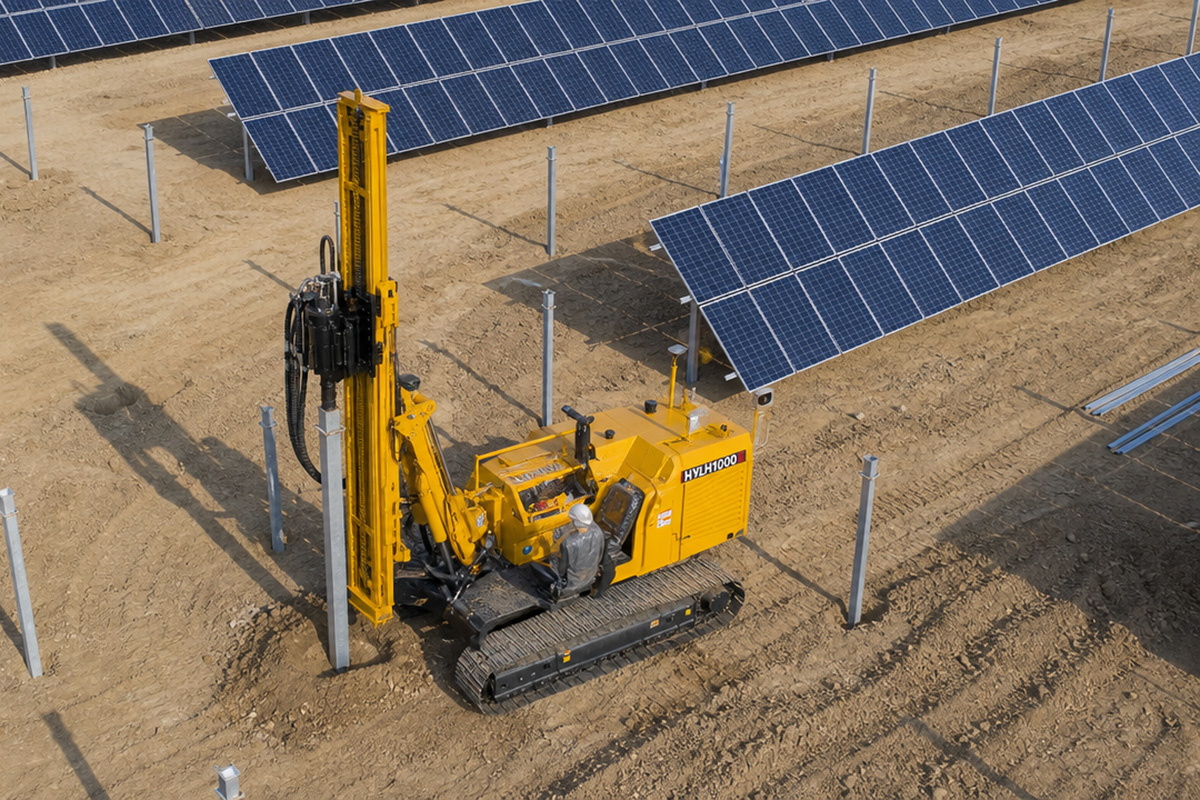
04 Crawler Undercarriage: Vulnerable to Reckless Driving on Slopes and Machine Relocation With Loaded Piles
Solar PV projects are mostly located in mountainous, wasteland and sloped terrain. The crawler undercarriage is sensitive to reckless rushing on slopes, piling on tilted ground and long‑distance relocation with piles loaded. These operations deform tracks, rollers and frame assemblies, triggering travel deviation and jamming. They severely compromise piling verticality and introduce project‑level risks.
Daily operation rules: keep low travel speed, decelerate on rugged slopes, level the machine before piling. Only short‑distance fine‑tuning of pile position is allowed; long‑distance travel under load is forbidden to preserve overall structural integrity.
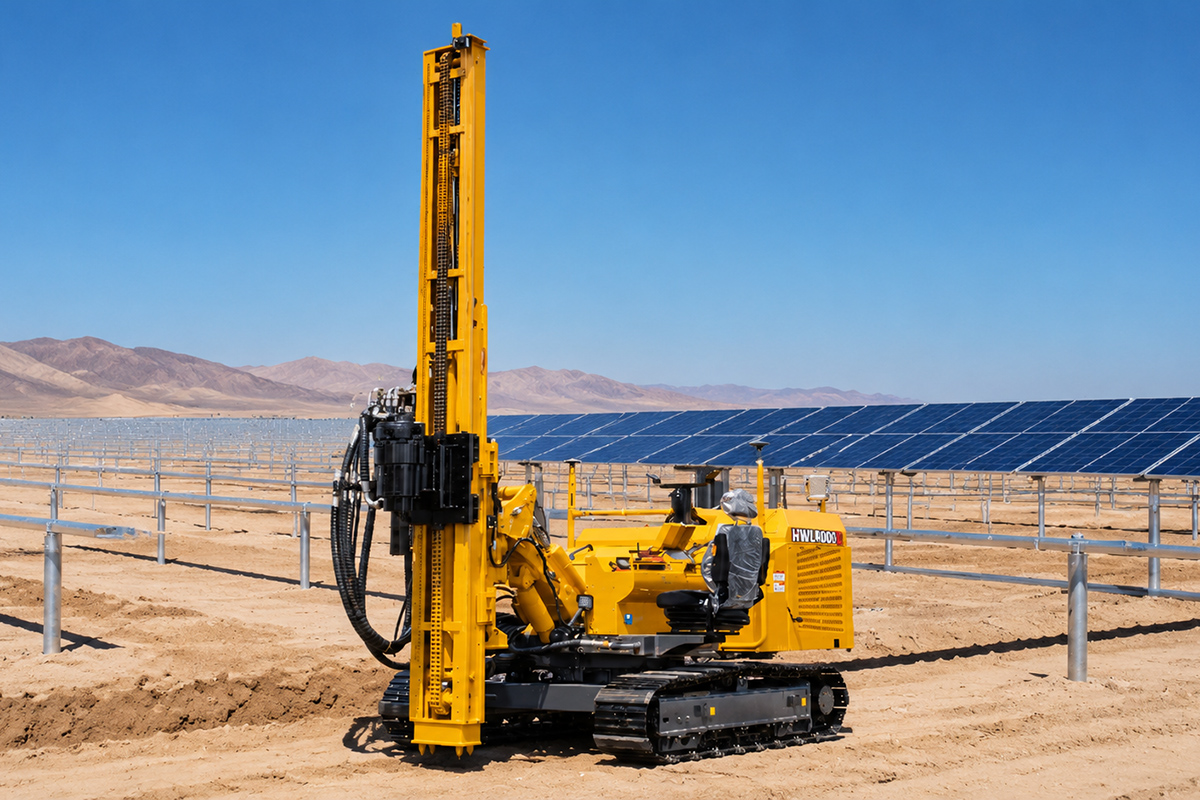
Standard Operation — Foundation for Long‑Term Stable Equipment Output
Standardized operation never holds back construction progress; instead, it delivers core advantages for site cost reduction, productivity improvement and quality assurance. By discarding rough operating habits and focusing on proper operational protection, you can effectively reduce failure‑caused downtime and sustain consistent equipment performance. Specializing in PV pile‑driving equipment, Hengwang Group delivers premium machinery plus professional practical guidance to support high‑efficiency, high‑quality delivery for solar PV projects worldwide.

Please fill out the form below according to your needs, and a Hengwang product specialist will contact you within one day.